Wordle
Introduction to Wordle: A Simple Game That Changed the Internet
Wordle is one of those rare digital phenomena that feels both incredibly simple and surprisingly deep. At its core, it’s just a five-letter word puzzle—guess the word in six tries. Yet somehow, that basic idea has managed to capture the attention of millions of people around the world, turning a daily guessing game into a cultural ritual.
What makes Wordle so fascinating isn’t just the gameplay—it’s the way it integrates into everyday life. People wake up, grab their phone or laptop, and tackle the day’s puzzle as part of their morning routine. It’s quick, engaging, and satisfying in a way that most mobile games struggle to achieve. There are no ads, no flashy animations, and no endless levels—just one puzzle per day.
From a design perspective, Wordle proves that constraints can actually enhance engagement. Limiting players to one puzzle per day creates anticipation and keeps the experience fresh. Instead of binge-playing for hours, users come back daily, making it more of a habit than a time sink.
In this guide, we’ll explore everything about Wordle—from its origins and mechanics to advanced strategies and psychological appeal. Whether you’re new to the game or trying to improve your win rate, this article will break it all down in a way that’s easy to follow but packed with expert insight.
The Origins of Wordle: From Personal Project to Global Sensation
Wordle wasn’t created by a massive gaming studio or backed by a marketing campaign. It started as a personal project by software engineer Josh Wardle, who originally designed the game as a gift for his partner. That origin story plays a huge role in understanding why Wordle feels so different from other games.
Unlike most apps that are built to maximize engagement metrics and revenue, Wordle was created with a focus on enjoyment and simplicity. There were no monetization strategies, no data tracking gimmicks, and no addictive mechanics engineered into the system. It was just a clean, thoughtful game.
The turning point came when Wardle decided to make the game public. Word of mouth spread quickly, especially on social media platforms where users began sharing their results using the now-famous colored square grids. These grids allowed players to showcase their progress without spoiling the answer, which made sharing both fun and respectful.
As the game gained traction, it eventually caught the attention of major media outlets and was later acquired by a well-known publication. Even after its acquisition, the core experience remained largely unchanged—a testament to the strength of its original design.
Wordle’s rise highlights something important: sometimes the best ideas don’t need complexity or massive funding. A well-executed simple concept can outperform even the most sophisticated products.
How Wordle Works: Understanding the Core Mechanics
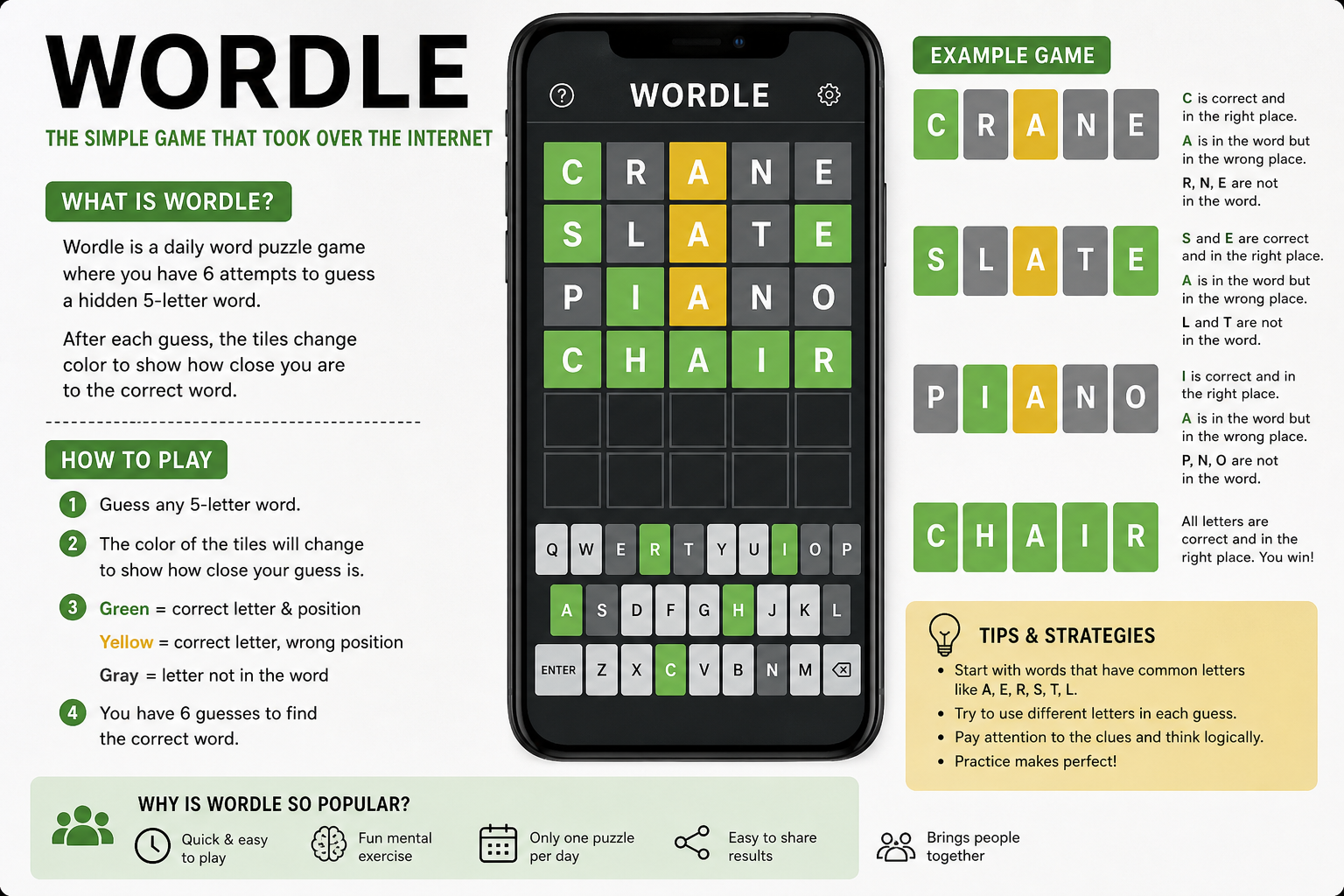
At first glance, Wordle looks incredibly straightforward, but there’s a surprising amount of depth in how it operates. Each day, players are given a hidden five-letter word. You have six attempts to guess it, and after each guess, the game provides feedback using colored tiles.
Green tiles indicate that a letter is correct and in the correct position. Yellow tiles mean the letter is in the word but placed incorrectly. Gray tiles show that the letter does not exist in the word at all. This feedback system is the heart of Wordle’s gameplay.
The brilliance lies in how this feedback guides your next move. Each guess isn’t just an attempt—it’s also a tool for gathering information. Skilled players don’t just guess randomly; they strategically choose words that maximize the information they gain.
Another key aspect is the restriction to real words. You can’t just input random letter combinations; your guesses must be valid dictionary words. This adds a layer of realism and ensures the game remains grounded in language rather than abstract puzzles.
Wordle also maintains consistency across players by offering the same word to everyone each day. This shared experience contributes to its social appeal, allowing friends and communities to compare results and strategies.
Why Wordle Became So Popular
The success of Wordle isn’t accidental—it’s the result of several factors coming together at the right time. One of the biggest reasons for its popularity is its accessibility. You don’t need to download an app or create an account. You simply open a browser and start playing.
Another major factor is its time efficiency. In a world where people are constantly busy, Wordle offers a quick mental challenge that can be completed in just a few minutes. It doesn’t demand a huge time commitment, which makes it appealing to a wide audience.
The social sharing feature also played a massive role. The colored grid format allowed players to share their results without revealing the answer. This created a sense of curiosity and competition among friends and followers.
Additionally, Wordle taps into a universal skill—language. Unlike games that require specific knowledge or reflexes, Wordle relies on vocabulary and logic, making it approachable for people of all ages and backgrounds.
Finally, the once-a-day format creates a sense of anticipation. Instead of overwhelming players with endless content, Wordle gives just enough to keep them coming back.
Basic Strategies for Beginners
If you’re new to Wordle, it’s easy to feel like you’re just guessing randomly. However, even at a beginner level, there are strategies that can significantly improve your chances of success.
One of the most important decisions is your starting word. A good starting word should include common vowels and frequently used consonants. Words like “crane,” “slate,” or “audio” are popular choices because they help reveal key letters early on.
Another essential strategy is to avoid repeating letters too early. In your first few guesses, focus on covering as many unique letters as possible. This helps you gather more information quickly and reduces the chances of missing important clues.
Pay close attention to the feedback after each guess. It’s not just about which letters are correct—it’s also about where they are placed. Use this information to refine your next guess rather than making random attempts.
Lastly, stay calm and think logically. Wordle is not a game of speed; it’s a game of reasoning. Taking a few extra seconds to analyze the board can make a big difference.
Advanced Strategies for Consistent Wins
Once you’ve mastered the basics, you can start incorporating advanced strategies to improve your win rate. One such strategy is letter frequency analysis. Certain letters appear more often in English words, and prioritizing these can give you an edge.
Another technique is narrowing down possibilities using elimination. By systematically removing letters that don’t fit, you can reduce the number of potential answers and make more informed guesses.
Positioning is also crucial. If you know a letter is correct but in the wrong position, experiment with placing it in different spots rather than ignoring it. This helps you quickly identify the correct arrangement.
Some experienced players also use “sacrifice words”—guesses that may not be the answer but help confirm multiple letters at once. This approach can be especially useful when you’re stuck between several similar options.
Consistency comes from combining these techniques and adapting your approach based on each puzzle.
The Psychology Behind Wordle’s Addictiveness
Wordle’s appeal goes beyond gameplay—it taps into human psychology in a very effective way. One key factor is the sense of accomplishment. Solving a puzzle, even a small one, triggers a feeling of satisfaction and boosts confidence.
The limited number of attempts creates tension, which keeps players engaged. Each guess matters, and the possibility of failure adds excitement to the experience.
Another psychological element is routine. Playing Wordle daily creates a habit, and habits are powerful drivers of behavior. Over time, it becomes part of your daily rhythm.
Social validation also plays a role. Sharing your results and seeing others’ performance creates a sense of connection and friendly competition.
Finally, the game’s simplicity reduces cognitive overload. In a world filled with complex apps and information, Wordle offers a refreshing mental break.
Common Mistakes Players Make
Even experienced players can fall into certain traps when playing Wordle. One common mistake is ignoring feedback. Some players focus too much on guessing new words without fully analyzing the clues they’ve already received.
Another mistake is repeating letters unnecessarily. While some words do contain repeated letters, overusing them early in the game can limit your ability to explore new possibilities.
Rushing is also a major issue. Wordle rewards careful thinking, not speed. Taking your time to evaluate each guess can significantly improve your results.
Overconfidence can lead to poor decisions as well. Just because a word seems likely doesn’t mean it’s correct. Always double-check your logic before committing to a guess.
Avoiding these mistakes can make a noticeable difference in your performance.
Wordle Variations and Spin-Offs
As Wordle gained popularity, it inspired a wave of similar games and variations. These spin-offs explore different themes, formats, and difficulty levels while maintaining the core concept.
Some versions use longer words, increasing the complexity and challenge. Others focus on specific topics, such as geography, music, or mathematics.
There are also multiplayer versions where players compete against each other in real time. These variations add a competitive element that changes the dynamic of the game.
Despite these innovations, the original Wordle remains the most محبوب due to its simplicity and balance.
The Cultural Impact of Wordle
Wordle has had a significant impact on digital culture. It introduced a new way of sharing achievements online—through visual patterns rather than text or screenshots.
The game also sparked conversations about language, strategy, and problem-solving. It brought people together in a unique way, creating a shared daily experience across different communities.
In many ways, Wordle represents a shift away from traditional gaming trends. It shows that people still value simplicity, creativity, and meaningful interaction.
Conclusion: Why Wordle Still Matters
Whether you’re Wordle playing casually or aiming to improve your skills, Wordle offers a satisfying and rewarding experience. It challenges Wordle your mind without overwhelming you, making it a perfect balance of fun and intellect.
As trends come and go, Wordle continues to stand out as a timeless example of thoughtful design. And honestly, that’s what makes it worth playing every single day.
YOU MAY HAVE MISSED
About the Author