Schoology Alfa
Introduction to Schoology Alfa
In today’s rapidly evolving educational landscape, digital platforms have become essential tools rather than optional add-ons. One such platform that has gained significant attention is Schoology, and within its ecosystem, the concept of “Schoology Alfa” is often discussed as an enhanced or customized implementation of this powerful learning management system (LMS). Whether you’re an educator, student, or administrator, understanding Schoology Alfa can unlock new levels of efficiency, engagement, and academic success.
Schoology Alfa is not a completely separate product but rather a term often used to describe a refined, optimized, or institution-specific version of Schoology. Schools or organizations may brand their LMS environment as “Alfa” to represent a more advanced, user-focused, or feature-rich setup. This could include tailored dashboards, improved workflows, or integrated tools designed to make teaching and learning more seamless.
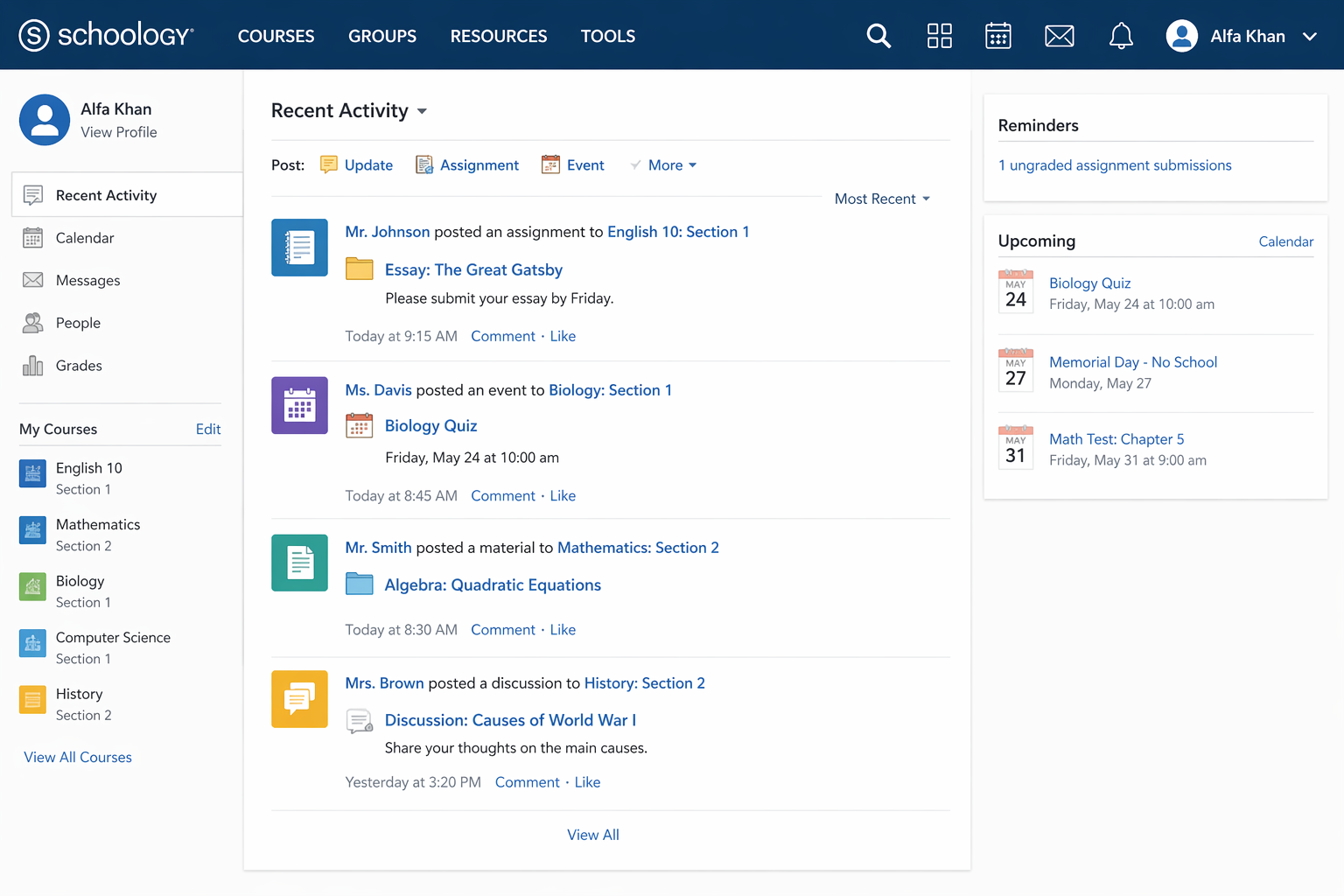
From assignment management to real-time communication, Schoology Alfa provides a centralized hub where everything happens. Instead of juggling multiple apps, users can rely on a single interface that combines course materials, grading systems, collaboration tools, and analytics. This consolidation is one of the key reasons why it’s becoming increasingly popular in modern education systems.
The Evolution of Learning Management Systems
Before diving deeper into Schoology Alfa, it’s important to understand how LMS platforms have evolved. Early digital learning tools were basic, offering little more than file sharing and simple communication features. Over time, the need for more interactive and data-driven solutions pushed developers to create more sophisticated systems.
Platforms like Moodle and Blackboard paved the way for modern LMS tools by introducing features such as quizzes, gradebooks, and discussion forums. However, these systems often lacked intuitive design and seamless integration, making them difficult for users to fully adopt.
Schoology changed the game by focusing on user experience. Its interface feels more like a social media platform than a traditional educational tool, which makes it easier for students to engage. Schoology Alfa builds on this foundation by refining usability and adding layers of customization that cater to specific institutional needs.
Today’s LMS platforms are no longer just tools for delivering content—they are ecosystems that support collaboration, analytics, and personalized learning. Schoology Alfa represents this next stage of evolution, where technology adapts to the user rather than the other way around.
Key Features of Schoology Alfa
One of the biggest strengths of Schoology Alfa lies in its robust set of features. These are designed to simplify complex educational processes while enhancing engagement and productivity for all users.
First, the course management system is incredibly flexible. Teachers can create structured lessons, upload multimedia content, and organize materials in a way that aligns with their teaching style. This flexibility ensures that every course feels unique rather than forced into a rigid template.
Second, communication tools are deeply integrated into the platform. Students and teachers can interact through messaging, discussion boards, and announcements. This real-time interaction fosters a sense of community, even in fully online environments. It also reduces the communication gap that often exists in traditional classrooms.
Third, Schoology Alfa includes advanced grading and analytics features. Educators can track student performance with detailed reports, identify learning gaps, and adjust their teaching strategies accordingly. This data-driven approach is essential for modern education, where personalized learning is becoming the norm.
Benefits for Students
Students are at the center of any educational system, and Schoology Alfa is designed with their needs in mind. One of the most noticeable benefits is accessibility. Students can access their courses, assignments, and grades from any device, at any time. This flexibility is particularly valuable for those balancing school with other responsibilities.
Another major advantage is organization. With all course materials in one place, students no longer need to search through emails or multiple platforms to find what they need. Everything—from lecture notes to deadlines—is clearly laid out, making it easier to stay on track.
Engagement is also significantly improved. Interactive features like quizzes, polls, and discussion forums encourage active participation rather than passive learning. Students are not just consuming information—they are interacting with it, which leads to better understanding and retention.
Advantages for Teachers
For educators, Schoology Alfa offers tools that streamline teaching and reduce administrative workload. Creating and managing courses becomes much easier, allowing teachers to focus more on delivering quality education rather than handling logistics.
The grading system is particularly helpful. Teachers can automate certain aspects of grading, provide detailed feedback, and maintain accurate records without spending hours on manual tasks. This efficiency can make a huge difference, especially for those managing multiple classes.
Additionally, the platform supports collaboration among teachers. They can share resources, exchange ideas, and work together to improve their teaching methods. This collaborative environment fosters continuous professional development and innovation.
Role in Remote and Hybrid Learning
The rise of remote and hybrid learning has highlighted the importance of platforms like Schoology Alfa. During times when physical classrooms are not accessible, having a reliable LMS ensures that education continues without disruption.
Schoology Alfa supports live sessions, recorded lectures, and asynchronous learning. This means students can learn at their own pace while still having access to real-time interactions when needed. The flexibility of this model accommodates different learning styles and schedules.
Moreover, the platform ensures consistency. Whether a student is attending classes in person or online, they have access to the same materials and resources. This uniformity helps maintain educational standards across different learning environments.
Customization and Personalization
One of the defining characteristics of Schoology Alfa is its ability to be customized. Schools can tailor the platform to match their branding, curriculum, and teaching philosophy. This level of customization creates a more cohesive and personalized experience for users.
Personalization extends to the learning process as well. Teachers can create differentiated assignments, adjust difficulty levels, and provide targeted feedback based on individual student performance. This approach recognizes that every student learns differently and adapts accordingly.
The ability to integrate third-party tools further enhances customization. Whether it’s adding video conferencing apps or specialized educational software, Schoology Alfa can be adapted to meet a wide range of needs.
Integration with Other Tools
Modern education relies on a variety of digital tools, and Schoology Alfa excels at integrating them into a single platform. This eliminates the need for switching between multiple applications, saving time and reducing confusion.
For example, it can integrate with tools like Google Classroom and Microsoft Teams, allowing users to combine the strengths of different platforms. These integrations make it easier to manage assignments, communicate, and collaborate.
Additionally, integration with cloud storage services ensures that files are easily accessible and securely stored. This level of connectivity is essential for creating a seamless digital learning environment.
Security and Data Privacy
In an era where data security is a major concern, Schoology Alfa takes privacy seriously. Educational institutions handle sensitive information, and protecting this data is a top priority.
The platform uses secure authentication methods and encryption to safeguard user information. Access controls ensure that only authorized individuals can view or modify data. These measures help build trust among users and institutions.
Furthermore, compliance with data protection regulations ensures that the platform meets industry standards. This is particularly important for schools operating in regions with strict privacy laws.
Challenges and Limitations
Despite its many advantages, Schoology Alfa is not without challenges. One common issue is the learning curve associated with new technology. While the platform is user-friendly, some users may still need time to adapt.
Another challenge is internet dependency. Since the platform is cloud-based, reliable internet access is essential. In areas with limited connectivity, this can pose a significant barrier to effective use.
Additionally, customization can sometimes become overwhelming. With so many options available, institutions may struggle to find the right balance between functionality and simplicity. Proper planning and training are crucial to overcoming this challenge.
Best Practices for Using Schoology Alfa
To get the most out of Schoology Alfa, it’s important to follow certain best practices. First, invest time in training. Both teachers and students should be familiar with the platform’s features to use it effectively.
Second, keep courses organized. Clear structure and consistent formatting make it easier for students to navigate and understand the material. Avoid clutter and focus on simplicity.
Third, encourage interaction. Use discussion boards, quizzes, and collaborative projects to keep students engaged. The more interactive the learning experience, the better the outcomes.
Future of Schoology Alfa
The future of Schoology Alfa looks promising as technology continues to evolve. Advances in artificial intelligence and data analytics are likely to play a significant role in shaping the platform’s development.
AI-driven insights could provide even more personalized learning experiences, helping educators tailor their teaching strategies to individual needs. Automation may also reduce administrative tasks further, allowing teachers to focus on what they do best—teaching.
As education becomes increasingly digital, platforms like Schoology Alfa will continue to be at the forefront of innovation. Their ability to adapt and evolve will determine their long-term success.
Conclusion
Schoology Alfa represents a modern approach to education, combining technology, flexibility, and user-centered design. It builds on the strengths of Schoology while offering enhanced features and customization options that cater to diverse educational needs.
For students, it provides accessibility, organization, and engagement. For teachers, it simplifies course management and enhances teaching effectiveness. For institutions, it offers a scalable and secure solution for digital learning.
While challenges exist, they are manageable with proper planning and training. As education continues to evolve, Schoology Alfa stands out as a powerful tool that can transform the way we teach and learn.
YOU MAY HAVE MISSED
About the Author