DePaul Basketball
Introduction to DePaul Basketball
When you talk about college basketball programs with deep roots, passionate fanbases, and a unique urban identity, DePaul Blue Demons always enters the conversation. Representing DePaul University in the heart of Chicago, the program has built a reputation that blends historic success with modern rebuilding ambitions. While it may not always dominate headlines like powerhouse programs, DePaul basketball holds a distinct place in the ecosystem of NCAA Division I.
The story of DePaul basketball isn’t just about wins and losses—it’s about identity. It’s about representing a city known for grit, resilience, and a deep love for sports. Over the decades, the program has seen highs that rival any in college basketball, as well as rebuilding phases that have tested its endurance. Yet through it all, the Blue Demons remain relevant, intriguing, and full of potential.
In today’s college basketball landscape, where recruiting battles, NIL deals, and conference competition shape success, DePaul is navigating a path that blends tradition with adaptation. To understand where the program is headed, it’s essential to first explore where it has been.
The Early Years: Building a Foundation
DePaul basketball dates back to the early 20th century, long before the modern structure of college athletics took shape. During those formative years, the program developed its identity as an independent team, competing against a variety of opponents across the country. Unlike many programs tied to conferences early on, DePaul built its reputation through scheduling flexibility and strong performances against elite teams.
This independence allowed DePaul to craft a national schedule, which helped elevate its profile. The Blue Demons weren’t confined to regional competition—they traveled, competed, and earned respect through consistent play. That approach laid the groundwork for the program’s later success and national recognition.
What stands out about these early years is how quickly DePaul became competitive. Even without the structure of a major conference, the team established itself as a serious contender. The foundation built during this period would later support one of the most successful eras in the program’s history.
The Golden Era of DePaul Basketball
If there’s one period that defines DePaul basketball, it’s the late 1970s and early 1980s. Under legendary coach Ray Meyer, the Blue Demons reached national prominence and became a household name in college basketball.
During this era, DePaul consistently ranked among the top teams in the country. The program made multiple deep runs in the NCAA Tournament, including a Final Four appearance in 1979. That season remains one of the most iconic in school history, showcasing the team’s ability to compete at the highest level.
Ray Meyer’s coaching style played a huge role in this success. Known for his charismatic personality and offensive philosophy, he turned DePaul into an exciting team to watch. Players thrived under his leadership, and the program developed a reputation for producing high-scoring, entertaining basketball.
Beyond wins, this era established DePaul as a brand. The Blue Demons became synonymous with Chicago basketball, drawing strong crowds and national attention. Even decades later, this golden era remains a benchmark for what the program strives to achieve again.
Legendary Players Who Shaped the Program
Great programs are defined by great players, and DePaul has produced its fair share of standout talent. One of the most iconic names in program history is Mark Aguirre. A dominant scorer and leader, Aguirre helped elevate DePaul to national prominence before going on to a successful NBA career.
Another key figure is Terry Cummings, whose impact on both ends of the court made him one of the most respected players in college basketball during his time. His physicality and skill set embodied the toughness associated with DePaul basketball.
In more recent years, players like Wilson Chandler have continued the tradition of sending talent to the professional level. While the program hasn’t consistently produced NBA stars in recent decades, it still serves as a platform for players looking to develop and compete at a high level.
These players didn’t just contribute statistically—they helped shape the identity of the program. Their success created a legacy that continues to influence recruiting, coaching, and fan expectations.
Conference Evolution and Big East Membership
For much of its history, DePaul operated as an independent program. However, as college basketball evolved, conference affiliation became increasingly important. Today, DePaul competes in the highly competitive Big East Conference.
Joining the Big East brought both opportunities and challenges. On one hand, it provided consistent exposure against top-tier competition. On the other, it raised the level of difficulty significantly. The conference includes some of the most respected programs in college basketball, making every game a test.
Competing in the Big East has forced DePaul to elevate its standards. Recruiting, coaching, and player development all need to align at a higher level to succeed. While results have been mixed, the experience of facing elite opponents regularly has helped shape the program’s long-term vision.
The Big East also enhances DePaul’s visibility. Games are nationally televised, and matchups against storied programs attract attention. This exposure is crucial for recruiting and maintaining relevance in the modern college basketball landscape.
The Home Court Experience: Wintrust Arena
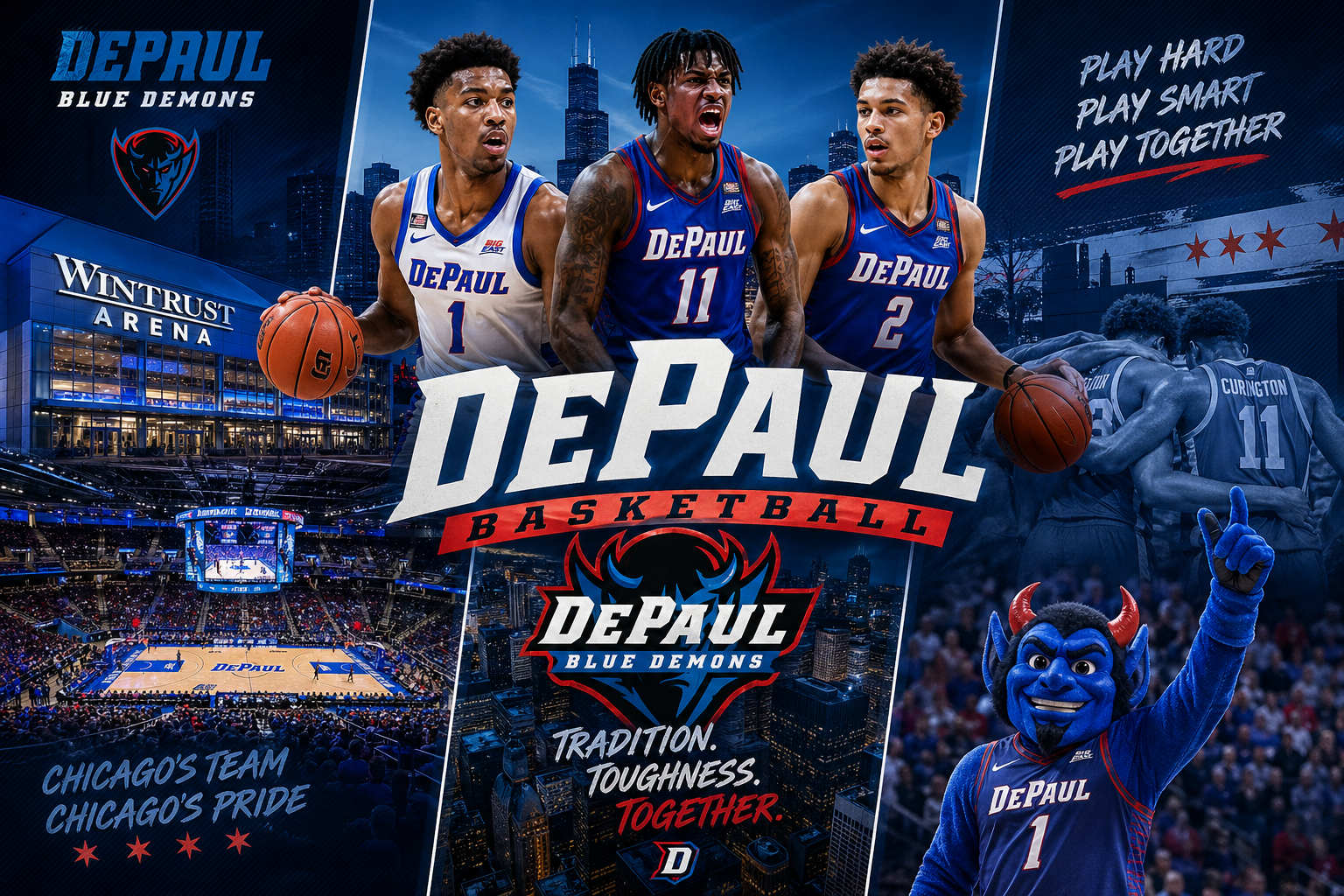
A team’s identity is often tied to its home court, and for DePaul, Wintrust Arena plays a central role. Located in Chicago, the arena provides a modern, professional environment that enhances both player performance and fan experience.
Unlike traditional campus arenas, Wintrust Arena reflects DePaul’s urban identity. It connects the program directly to the city, making games feel like major events rather than just college contests. This setting also helps with recruiting, as prospects are drawn to high-quality facilities and big-game atmospheres.
The arena’s design and amenities create an engaging experience for fans. From seating to sightlines, everything is built to maximize excitement. When the crowd is energized, it can become a significant advantage for the Blue Demons.
However, like many programs, DePaul continues to work on consistently filling the arena. Strong performance on the court often translates to better attendance, making success and fan engagement closely linked.
Challenges and Rebuilding Phases
It would be unrealistic to discuss DePaul basketball without acknowledging its struggles. Since its golden era, the program has faced multiple rebuilding phases, often struggling to find consistent success in conference play.
Several factors have contributed to these challenges. Increased competition, recruiting battles, and coaching changes have all played a role. Additionally, competing in a tough conference like the Big East means there are few easy games.
Despite these obstacles, DePaul has shown resilience. Each rebuilding phase brings new opportunities to reset, refine strategies, and build a stronger foundation. The program continues to invest in coaching, facilities, and player development, aiming to return to national prominence.
One important aspect of these rebuilding efforts is patience. Success in college basketball doesn’t happen overnight, especially in competitive environments. DePaul’s ability to stay committed to its long-term vision will ultimately determine its trajectory.
Coaching Philosophy and Leadership
Coaching is at the heart of any successful basketball program. Over the years, DePaul has seen a variety of coaching styles, each bringing a unique approach to the game. From offensive-minded systems to defense-first philosophies, the program has experimented with different strategies to find consistency.
Leadership extends beyond tactics. A strong coach must also build relationships, manage player development, and create a positive culture. For DePaul, establishing a clear identity has been a key focus in recent years.
Modern coaching also involves adapting to changes in college basketball. Transfer portals, NIL opportunities, and evolving player expectations require flexibility. Coaches must balance traditional fundamentals with modern dynamics to remain competitive.
At its best, DePaul basketball thrives under leadership that combines discipline with creativity. Finding the right balance is essential for sustained success.
Recruiting in a Competitive Landscape
Recruiting is one of the most critical aspects of college basketball, and for DePaul, it presents both opportunities and challenges. Being located in Chicago provides access to a rich talent pool, but it also means competing with other major programs for the same players.
Local recruiting is a key strategy. Keeping top talent within the city can significantly boost the program’s competitiveness. However, this requires building strong relationships with high school coaches and establishing trust within the community.
National recruiting also plays a role. DePaul looks beyond Chicago to find players who fit its system and culture. This broader approach helps diversify the roster and bring in different skill sets.
In the modern era, recruiting goes beyond talent evaluation. Players consider facilities, exposure, coaching stability, and NIL opportunities. DePaul’s ability to present a compelling overall package will determine its success in attracting top prospects.
Fan Culture and Community Impact
DePaul basketball isn’t just about the team—it’s about the community that supports it. Fans play a crucial role in shaping the program’s identity, creating an atmosphere that motivates players and enhances the overall experience.
Chicago’s sports culture is intense and passionate, and DePaul benefits from being part of that environment. While competition for attention is fierce, the program has a dedicated fan base that continues to show support.
Community engagement is another important aspect. Through outreach programs, youth camps, and local events, DePaul connects with fans beyond game day. This strengthens relationships and builds long-term loyalty.
A strong fan culture can be a game-changer. When the arena is full and the energy is high, it creates an advantage that goes beyond strategy and skill.
The Future of DePaul Basketball
Looking ahead, the future of DePaul basketball is filled with both challenges and opportunities. The program is working to reestablish itself as a competitive force within the Big East and on the national stage.
Key areas of focus include recruiting, player development, and coaching stability. By building a consistent system and culture, DePaul aims to create a sustainable path to success.
The evolving landscape of college basketball also presents new opportunities. NIL deals, media exposure, and technological advancements can all contribute to the program’s growth. Embracing these changes will be essential for staying competitive.
Ultimately, the goal is clear: to return to the level of success that defined the program’s golden era. While the journey may take time, the foundation is in place for DePaul basketball to rise again.
Conclusion
DePaul basketball is a program defined by its history, resilience, and potential. From its early days as an independent team to its golden era under Ray Meyer, and now its journey through the competitive Big East, the Blue Demons have experienced every facet of college basketball.
What makes DePaul unique is its connection to Chicago, its passionate fan base, and its commitment to growth. While challenges remain, the program continues to evolve, adapt, and push forward.
For fans, players, and analysts alike, DePaul basketball represents more than just a team—it’s a story of perseverance and ambition. And as the next chapter unfolds, one thing is certain: the Blue Demons are far from finished.
YOU MAY HAVE MISSED
About the Author