Target
When you hear the word “target,” what comes to mind? For some, it might be a retail giant like Target Corporation. For others, it’s about goals, objectives, or something you aim to achieve. The beauty of this keyword is its versatility—it stretches across business, psychology, marketing, personal development, and even everyday decision-making.
In this in-depth guide, we’ll unpack “target” from multiple angles. Think of this as a practical, expert-level walkthrough written in a relaxed tone—something you can actually enjoy reading while learning something meaningful.
Understanding the Core Meaning of “Target”
At its simplest level, a target is something you aim for. It can be a measurable goal, a defined outcome, or even a group of people you want to reach. The term is widely used because it’s incredibly adaptable. Whether you’re setting sales goals, planning a marketing campaign, or working on personal growth, targets give you direction.
In a broader sense, a target acts as a focal point. It helps you filter out distractions and prioritize actions that move you closer to your desired result. Without a clear target, efforts become scattered and inefficient. That’s why successful individuals and organizations spend a significant amount of time defining their targets before taking action.
Another important aspect is clarity. A vague target like “I want to grow my business” lacks impact. A refined target such as “Increase revenue by 20% in six months through digital marketing” creates a clear roadmap. The more specific your target, the easier it becomes to measure progress and adjust strategies along the way.
The Evolution of Target as a Concept
Historically, the idea of a target originated from physical aiming—think archery or shooting. The concept was literal: hit the mark. Over time, this idea evolved into metaphorical usage across disciplines like business, education, and psychology.
In modern times, targets have become more data-driven. Organizations rely heavily on analytics to set precise targets. For example, businesses now use customer data to define target audiences instead of relying on guesswork. This shift has made targeting more accurate and efficient.
Additionally, technology has expanded how targets are tracked. Tools like dashboards, analytics platforms, and performance metrics allow real-time monitoring. This means targets are no longer static—they evolve based on performance and insights. This dynamic nature has made targeting a continuous process rather than a one-time decision.
Types of Targets You Should Know
Targets come in different forms depending on context. Understanding these variations helps you apply them effectively.
First, there are short-term targets. These are immediate goals designed to create momentum. For example, completing a project milestone within a week. They keep motivation high and provide quick wins that build confidence.
Then there are long-term targets. These require sustained effort and strategic planning. Examples include career advancement, business growth, or financial independence. Long-term targets often break down into smaller milestones, making them manageable.
Finally, there are performance-based targets. These are tied to measurable outcomes, such as sales numbers or website traffic. They are especially common in business environments, where results need to be tracked and evaluated regularly.
Target Setting in Business Strategy
In business, targets are everything. They guide decision-making, resource allocation, and overall direction. Without clearly defined targets, even the most talented teams can struggle to deliver results.
Companies typically set targets at multiple levels—organizational, departmental, and individual. For instance, a company might aim to increase market share, while a marketing team focuses on lead generation, and individual employees work on specific KPIs. This layered approach ensures alignment across the organization.
Another key factor is adaptability. Markets change, customer preferences evolve, and competition intensifies. Businesses that regularly review and adjust their targets are more likely to stay ahead. Static targets can quickly become irrelevant in a fast-moving environment.
The Role of Target Audience in Marketing
One of the most critical uses of the term “target” is in marketing—specifically, target audience. This refers to the specific group of people a business wants to reach with its products or services.
Identifying a target audience involves analyzing demographics, interests, behaviors, and needs. For example, a fitness brand might target young adults interested in health and wellness. The more detailed the profile, the more effective the marketing strategy becomes.
A well-defined target audience allows for personalized messaging. Instead of generic advertising, businesses can create campaigns that resonate deeply with their audience. This not only improves engagement but also increases conversion rates.
How Targeting Improves Decision-Making
Targets simplify decision-making by providing a clear reference point. When faced with multiple options, you can evaluate which choice aligns best with your target. This reduces confusion and speeds up the decision process.
For example, if your target is to save money, you’re less likely to make impulsive purchases. Similarly, a business targeting premium customers will avoid strategies that dilute brand value. Targets act as a filter, helping you stay consistent with your goals.
Another advantage is accountability. When targets are defined, it becomes easier to measure success or failure. This encourages responsibility and fosters a results-oriented mindset.
SMART Targets: A Proven Framework
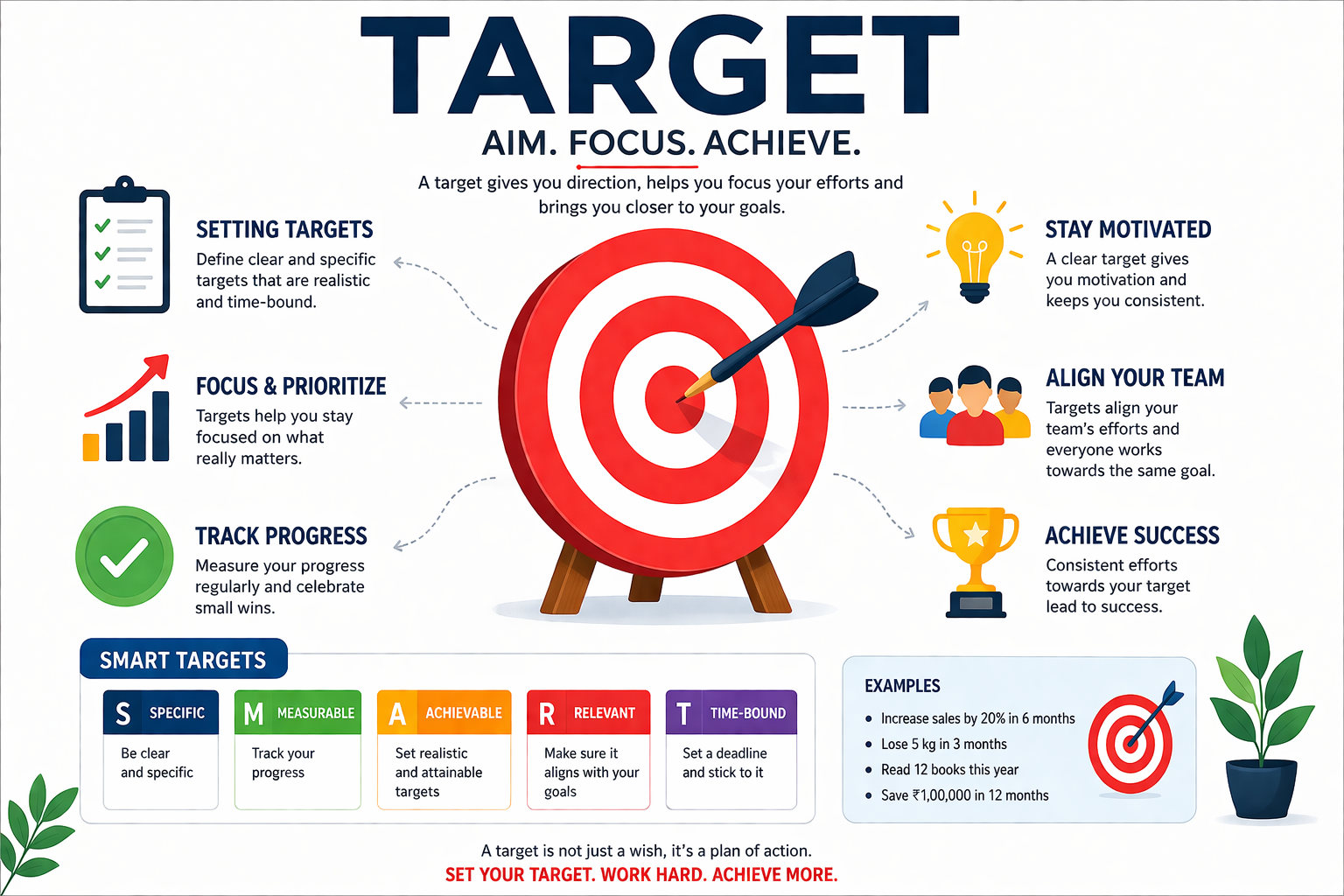
One of the most widely used methods for setting effective targets is the SMART framework. It stands for Specific, Measurable, Achievable, Relevant, and Time-bound.
Specific targets eliminate ambiguity. Instead of saying “grow sales,” you specify how much growth you want and in what timeframe. Measurable targets allow you to track progress using data.
Achievable targets ensure realism. Setting overly ambitious goals can lead to frustration, while too-easy targets may not drive improvement. Relevant targets align with broader objectives, ensuring consistency.
Finally, time-bound targets create urgency. Deadlines push you to take action and maintain focus. Together, these elements create a balanced and effective approach to target setting.
Target in Personal Development
Targets are not just for businesses—they play a crucial role in personal growth. Whether it’s improving skills, building habits, or achieving life goals, targets provide structure and motivation.
For example, someone aiming to improve fitness might set a target to exercise five times a week. This creates a clear commitment and helps track progress. Over time, consistent effort leads to meaningful results.
Personal targets also boost confidence. Achieving small milestones builds momentum and reinforces belief in your abilities. This positive feedback loop encourages you to aim higher and pursue bigger goals.
Common Mistakes in Setting Targets
Despite their importance, many people struggle with setting effective targets. One common mistake is lack of clarity. Vague targets make it difficult to take action or measure success.
Another issue is unrealistic expectations. Setting targets that are too ambitious can lead to burnout and disappointment. It’s important to balance ambition with practicality.
Ignoring progress tracking is another major pitfall. Without regular evaluation, you won’t know whether you’re on the right path. Monitoring progress allows you to make adjustments and stay aligned with your goals.
The Psychology Behind Targets
Targets tap into fundamental psychological principles. They create a sense of purpose and direction, which is essential for motivation. When you know what you’re aiming for, it becomes easier to stay committed.
Another psychological aspect is reward anticipation. Achieving a target triggers a sense of accomplishment, releasing dopamine in the brain. This reinforces positive behavior and encourages repetition.
Targets also help reduce anxiety. Uncertainty can be stressful, but having a clear goal provides structure and clarity. This makes challenges feel more manageable and less overwhelming.
Measuring Success: Are You Hitting Your Target?
Setting a target is only half the job—measuring success is equally important. This involves tracking performance using relevant metrics.
For businesses, this might include revenue, customer acquisition, or engagement rates. For individuals, it could be progress in skills, habits, or personal milestones. The key is consistency in measurement.
Regular reviews help identify gaps and opportunities. If you’re not meeting your target, it’s a chance to analyze what’s going wrong and make necessary adjustments. This continuous improvement process is what drives long-term success.
The Role of Technology in Target Tracking
Modern technology has transformed how targets are managed. Tools like analytics software, project management platforms, and mobile apps make tracking easier than ever.
These tools provide real-time data, allowing you to monitor progress instantly. This level of visibility helps you stay on track and make informed decisions.
Automation is another advantage. Many tools can send reminders, generate reports, and even suggest improvements. This reduces manual effort and increases efficiency, making target management more streamlined.
Target vs Goal: Is There a Difference?
While often used interchangeably, “target” and “goal” have subtle differences. A goal is a broader aspiration, while a target is more specific and measurable.
For example, a goal might be “improve health,” while a target could be “lose 5 kg in three months.” Targets are essentially actionable steps that help you achieve your goals.
Understanding this distinction can improve how you plan and execute strategies. By breaking down goals into targets, you create a clear and structured approach.
Real-World Example: Retail Targeting Strategies
Retail companies like Target Corporation use advanced targeting strategies to attract customers. They analyze shopping behavior, preferences, and trends to create personalized experiences.
For instance, they might recommend products based on past purchases or send tailored promotions. This level of targeting enhances customer satisfaction and boosts sales.
Another strategy is store layout optimization. By understanding customer behavior, retailers can design spaces that encourage browsing and purchasing. Every detail, from product placement to pricing, is aligned with target objectives.
Adapting Targets in a Changing World
The world is constantly evolving, and targets must adapt accordingly. Economic shifts, technological advancements, and cultural changes all influence how targets are set and achieved.
Flexibility is key. Sticking rigidly to outdated targets can hinder progress. Instead, regular reviews and adjustments ensure relevance and effectiveness.
Organizations that embrace change and update their targets accordingly are better positioned for success. This proactive approach allows them to stay competitive and responsive to new opportunities.
Final Thoughts: Why Targets Matter More Than Ever
In today’s fast-paced world, having clear targets is no longer optional—it’s essential. They provide direction, improve focus, and enhance decision-making. Whether you’re running a business or working on personal growth, targets act as a guiding force.
The key is to set meaningful, realistic, and measurable targets. Combine this with consistent tracking and adaptability, and you’ll create a powerful system for success.
At the end of the day, targets are about intention. They represent where you want to go and how you plan to get there. With the right approach, they can transform ambition into achievement—and that’s what makes them so powerful.
YOU MAY HA VE MISSED
About the Author