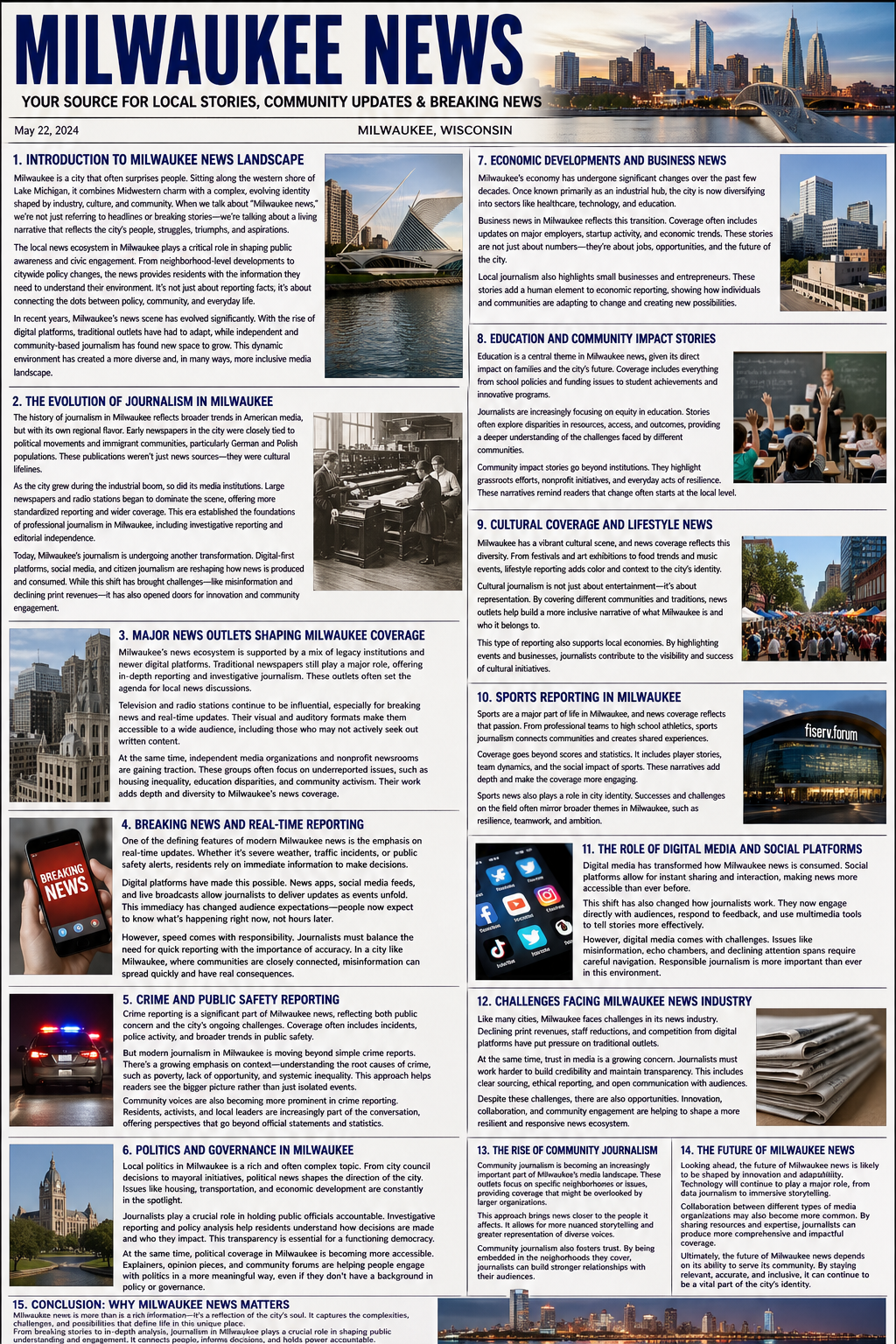
Milwaukee News
Introduction to Milwaukee News Landscape
Milwaukee is a city that often surprises people. Sitting along the western shore of Lake Michigan, it combines Midwestern charm with a complex, evolving identity shaped by industry, culture, and community. When we talk about “Milwaukee news,” we’re not just referring to headlines or breaking stories—we’re talking about a living narrative that reflects the city’s people, struggles, triumphs, and aspirations.
The local news ecosystem in Milwaukee plays a critical role in shaping public awareness and civic engagement. From neighborhood-level developments to citywide policy changes, the news provides residents with the information they need to understand their environment. It’s not just about reporting facts; it’s about connecting the dots between policy, community, and everyday life.
In recent years, Milwaukee’s news scene has evolved significantly. With the rise of digital platforms, traditional outlets have had to adapt, while independent and community-based journalism has found new space to grow. This dynamic environment has created a more diverse and, in many ways, more inclusive media landscape.
The Evolution of Journalism in Milwaukee
As the city grew during the industrial boom, so did its media institutions. Large newspapers and radio stations began to dominate the scene, offering more standardized reporting and wider coverage. This era established the foundations of professional journalism in Milwaukee, including investigative reporting and editorial independence.
Today, Milwaukee’s journalism is undergoing another transformation. Digital-first platforms, social media, and citizen journalism are reshaping how news is produced and consumed. While this shift has brought challenges—like misinformation and declining print revenues—it has also opened doors for innovation and community engagement.
Major News Outlets Shaping Milwaukee Coverage
Milwaukee’s news ecosystem is supported by a mix of legacy institutions and newer digital platforms. Traditional newspapers still play a major role, offering in-depth reporting and investigative journalism. These outlets often set the agenda for local news discussions.
Television and radio stations continue to be influential, especially for breaking news and real-time updates. Their visual and auditory formats make them accessible to a wide audience, including those who may not actively seek out written content.
At the same time, independent media organizations and nonprofit newsrooms are gaining traction. These groups often focus on underreported issues, such as housing inequality, education disparities, and community activism. Their work adds depth and diversity to Milwaukee’s news coverage.
Breaking News and Real-Time Reporting
One of the defining features of modern Milwaukee news is the emphasis on real-time updates. Whether it’s severe weather, traffic incidents, or public safety alerts, residents rely on immediate information to make decisions.
Digital platforms have made this possible. News apps, social media feeds, and live broadcasts allow journalists to deliver updates as events unfold. This immediacy has changed audience expectations—people now expect to know what’s happening right now, not hours later.
However, speed comes with responsibility. Journalists must balance the need for quick reporting with the importance of accuracy. In a city like Milwaukee, where communities are closely connected, misinformation can spread quickly and have real consequences.
Crime and Public Safety Reporting
Crime reporting is a significant part of Milwaukee news, reflecting both public concern and the city’s ongoing challenges. Coverage often includes incidents, police activity, and broader trends in public safety.
But modern journalism in Milwaukee is moving beyond simple crime reports. There’s a growing emphasis on context—understanding the root causes of crime, such as poverty, lack of opportunity, and systemic inequality. This approach helps readers see the bigger picture rather than just isolated events.
Community voices are also becoming more prominent in crime reporting. Residents, activists, and local leaders are increasingly part of the conversation, offering perspectives that go beyond official statements and statistics.
Politics and Governance in Milwaukee
Local politics in Milwaukee is a rich and often complex topic. From city council decisions to mayoral initiatives, political news shapes the direction of the city. Issues like housing, transportation, and economic development are constantly in the spotlight.
Journalists play a crucial role in holding public officials accountable. Investigative reporting and policy analysis help residents understand how decisions are made and who they impact. This transparency is essential for a functioning democracy.
At the same time, political coverage in Milwaukee is becoming more accessible. Explainers, opinion pieces, and community forums are helping people engage with politics in a more meaningful way, even if they don’t have a background in policy or governance.
Economic Developments and Business News
Milwaukee’s economy has undergone significant changes over the past few decades. Once known primarily as an industrial hub, the city is now diversifying into sectors like healthcare, technology, and education.
Business news in Milwaukee reflects this transition. Coverage often includes updates on major employers, startup activity, and economic trends. These stories are not just about numbers—they’re about jobs, opportunities, and the future of the city.
Local journalism also highlights small businesses and entrepreneurs. These stories add a human element to economic reporting, showing how individuals and communities are adapting to change and creating new possibilities.
Education and Community Impact Stories
Education is a central theme in Milwaukee news, given its direct impact on families and the city’s future. Coverage includes everything from school policies and funding issues to student achievements and innovative programs.
Journalists are increasingly focusing on equity in education. Stories often explore disparities in resources, access, and outcomes, providing a deeper understanding of the challenges faced by different communities.
Community impact stories go beyond institutions. They highlight grassroots efforts, nonprofit initiatives, and everyday acts of resilience. These narratives remind readers that change often starts at the local level.
Cultural Coverage and Lifestyle News
Milwaukee has a vibrant cultural scene, and news coverage reflects this diversity. From festivals and art exhibitions to food trends and music events, lifestyle reporting adds color and context to the city’s identity.
Cultural journalism is not just about entertainment—it’s about representation. By covering different communities and traditions, news outlets help build a more inclusive narrative of what Milwaukee is and who it belongs to.
This type of reporting also supports local economies. By highlighting events and businesses, journalists contribute to the visibility and success of cultural initiatives.
Sports Reporting in Milwaukee
Sports are a major part of life in Milwaukee, and news coverage reflects that passion. From professional teams to high school athletics, sports journalism connects communities and creates shared experiences.
Coverage goes beyond scores and statistics. It includes player stories, team dynamics, and the social impact of sports. These narratives add depth and make the coverage more engaging.
Sports news also plays a role in city identity. Successes and challenges on the field often mirror broader themes in Milwaukee, such as resilience, teamwork, and ambition.
The Role of Digital Media and Social Platforms
Digital media has transformed how Milwaukee news is consumed. Social platforms allow for instant sharing and interaction, making news more accessible than ever before.
This shift has also changed how journalists work. They now engage directly with audiences, respond to feedback, and use multimedia tools to tell stories more effectively.
However, digital media comes with challenges. Issues like misinformation, echo chambers, and declining attention spans require careful navigation. Responsible journalism is more important than ever in this environment.
Challenges Facing Milwaukee News Industry
Like many cities, Milwaukee faces challenges in its news industry. Declining print revenues, staff reductions, and competition from digital platforms have put pressure on traditional outlets.
At the same time, trust in media is a growing concern. Journalists must work harder to build credibility and maintain transparency. This includes clear sourcing, ethical reporting, and open communication with audiences.
Despite these challenges, there are also opportunities. Innovation, collaboration, and community engagement are helping to shape a more resilient and responsive news ecosystem.
The Rise of Community Journalism
Community journalism is becoming an increasingly important part of Milwaukee’s media landscape. These outlets focus on specific neighborhoods or issues, providing coverage that might be overlooked by larger organizations.
This approach brings news closer to the people it affects. It allows for more nuanced storytelling and greater representation of diverse voices.
Community journalism also fosters trust. By being embedded in the neighborhoods they cover, journalists can build stronger relationships with their audiences.
The Future of Milwaukee News
Looking ahead, the future of Milwaukee news is likely to be shaped by innovation and adaptability. Technology will continue to play a major role, from data journalism to immersive storytelling.
Collaboration between different types of media organizations may also become more common. By sharing resources and expertise, journalists can produce more comprehensive and impactful coverage.
Ultimately, the future of Milwaukee news depends on its ability to serve its community. By staying relevant, accurate, and inclusive, it can continue to be a vital part of the city’s identity.
Conclusion: Why Milwaukee News Matters
Milwaukee news is more than just information—it’s a reflection of the city’s soul. It captures the complexities, challenges, and possibilities that define life in this unique place.
From breaking stories to in-depth analysis, journalism in Milwaukee plays a crucial role in shaping public understanding and engagement. It connects people, informs decisions, and holds power accountable.
As the media landscape continues to evolve, one thing remains constant: the importance of telling the stories that matter. In Milwaukee, those stories are as diverse and dynamic as the city itself.
YOU MAY HAVE MISSED
About the Author