Quizzes
Introduction to Quizzes: More Than Just Questions
Quizzes are everywhere—on social media, in classrooms, embedded in websites, and even tucked inside corporate training modules. At first glance, they seem simple: a series of questions followed by answers. But when you take a closer look, quizzes are far more than that. They are powerful tools for learning, engagement, assessment, and even entertainment. Whether you’re answering a fun personality quiz or taking a high-stakes academic test, quizzes shape how we interact with information.
In today’s digital landscape, quizzes have evolved beyond traditional formats. Platforms like Kahoot! and Quizlet have transformed how quizzes are created and consumed, making them interactive and highly engaging. This evolution has made quizzes accessible to everyone—from students and teachers to marketers and content creators. They are no longer limited to classrooms; they are now integral to online experiences.
From an expert perspective, quizzes serve multiple roles. They can test knowledge, reinforce learning, collect data, or simply entertain. Understanding how quizzes function—and why they are so effective—can help you use them more strategically, whether you’re designing one or taking one.
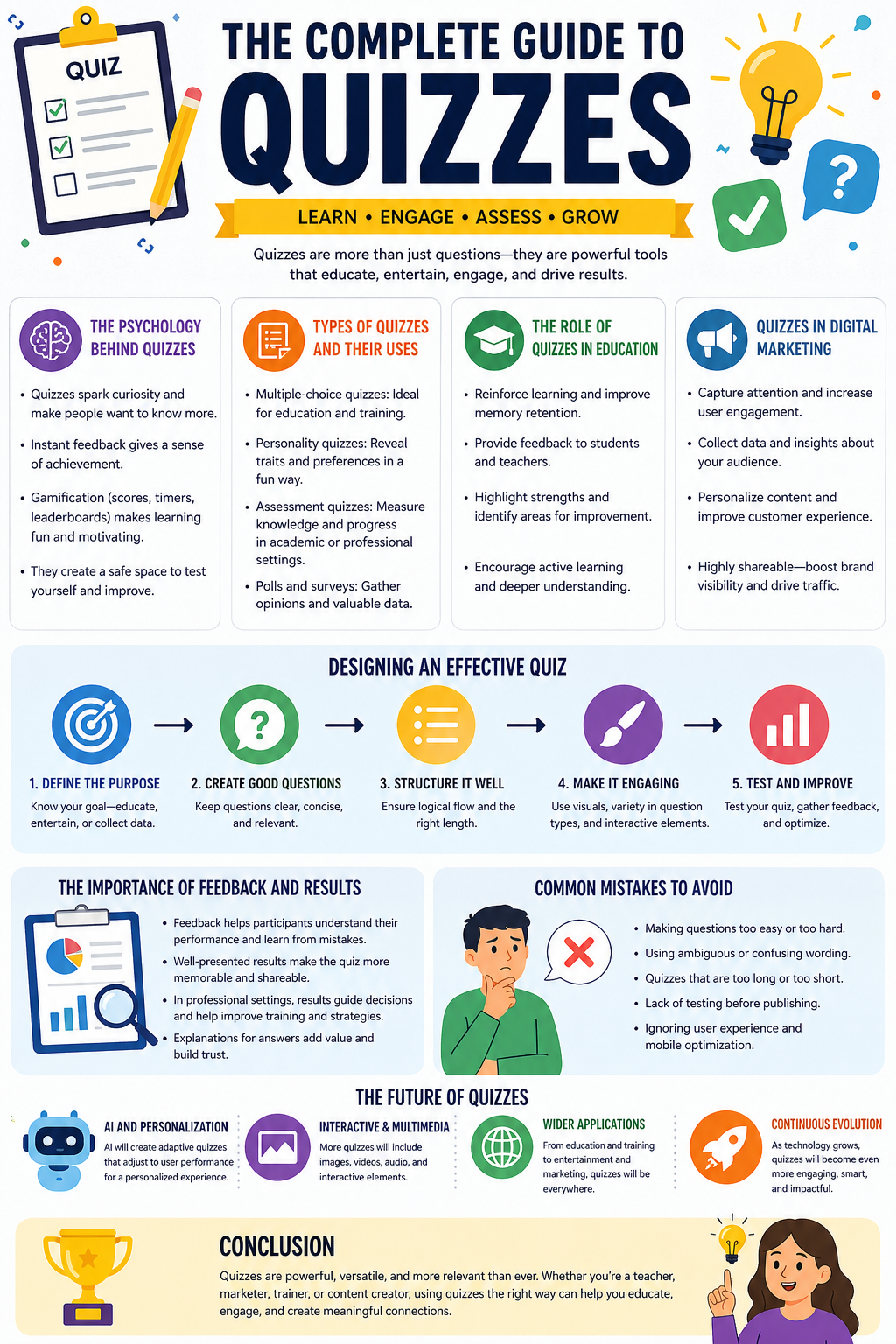
The Psychology Behind Quizzes
Quizzes tap into fundamental aspects of human psychology. One of the primary reasons they are so effective is because they trigger curiosity. When people encounter a quiz, especially one with an intriguing title like “What Type of Leader Are You?”, they feel compelled to find out the answer. This curiosity drives engagement and keeps users invested until the end.
Another key psychological factor is instant feedback. Unlike traditional learning methods, quizzes often provide immediate results. This instant gratification reinforces learning and helps individuals quickly identify what they know and what they don’t. It also creates a sense of accomplishment, even in small doses, which encourages repeated participation.
Quizzes also leverage the concept of gamification. By incorporating elements like scores, timers, and leaderboards, they turn learning into a game. This not only makes the experience more enjoyable but also increases motivation. People are naturally competitive, and quizzes give them a chance to test themselves against others or their own previous performance.
Types of Quizzes and Their Uses
Quizzes come in many forms, each serving a different purpose. One of the most common types is the multiple-choice quiz, which is widely used in education and training. These quizzes are efficient for testing knowledge and are easy to grade, making them a popular choice for large groups.
Another popular category is personality quizzes. These are often seen on social media and entertainment websites. Instead of testing knowledge, they aim to reveal something about the participant’s character or preferences. While they may not always be scientifically accurate, they are highly engaging and shareable.
Assessment quizzes, on the other hand, are more structured and are used in academic or professional settings. They are designed to evaluate understanding and measure progress. These quizzes often include a mix of question types, such as short answers, true/false, and problem-solving questions.
The Role of Quizzes in Education
In educational settings, quizzes play a crucial role in reinforcing learning. They help students recall information, which strengthens memory retention. Research has shown that frequent low-stakes quizzes can significantly improve long-term learning outcomes.
Quizzes also provide valuable feedback to both students and teachers. For students, they highlight areas that need improvement. For teachers, they offer insights into how well the material has been understood. This allows for more targeted instruction and better learning outcomes overall.
Additionally, quizzes encourage active learning. Instead of passively reading or listening, students are required to engage with the material. This active participation leads to deeper understanding and better retention of information.
Quizzes in Digital Marketing and Content Strategy
Quizzes have become a powerful tool in digital marketing. They are highly effective for capturing attention and increasing user engagement. A well-designed quiz can keep users on a website longer, which improves SEO performance and reduces bounce rates.
Marketers also use quizzes to collect data. By asking targeted questions, they can gain insights into user preferences, behaviors, and needs. This data can then be used to personalize marketing campaigns and improve customer experiences.
Another advantage of quizzes in marketing is their shareability. People love sharing their quiz results on social media, which increases brand visibility and drives organic traffic. This makes quizzes a cost-effective way to reach a larger audience.
Designing an Effective Quiz
Creating a successful quiz requires careful planning and attention to detail. The first step is to define the purpose of the quiz. Are you trying to educate, entertain, or collect data? The answer to this question will guide the design process.
Next, focus on the questions. They should be clear, concise, and relevant to the quiz’s objective. Avoid overly complex language or ambiguous wording, as this can confuse participants and reduce engagement.
The structure of the quiz is equally important. A good quiz should have a logical flow, with questions arranged in a way that makes sense. It should also be the right length—long enough to provide value but not so long that it becomes tedious.
The Importance of Feedback and Results
Feedback is a critical component of any quiz. It not only informs participants about their performance but also enhances the learning experience. Detailed explanations for answers can help users understand their mistakes and learn from them.
The way results are presented also matters. Clear, visually appealing results can make the quiz more enjoyable and memorable. For personality quizzes, creative and relatable descriptions can increase shareability and engagement.
In professional settings, feedback can be used to guide decision-making. For example, in training programs, quiz results can identify skill gaps and inform future training initiatives.
Common Mistakes to Avoid When Creating Quizzes
One of the most common mistakes in quiz design is making questions too difficult or too easy. A well-balanced quiz should challenge participants without frustrating them. Finding the right level of difficulty is key to maintaining engagement.
Another mistake is poor question design. Ambiguous or misleading questions can confuse participants and lead to inaccurate results. It’s important to test your quiz before publishing it to ensure clarity and accuracy.
Length is another factor to consider. Quizzes that are too long can lead to drop-offs, while those that are too short may not provide enough value. Striking the right balance is essential for a successful quiz.
The Future of Quizzes
As technology continues to evolve, so do quizzes. Artificial intelligence and machine learning are beginning to play a role in quiz design, enabling more personalized and adaptive experiences. These technologies can adjust the difficulty of questions based on user performance, creating a more tailored experience.
Interactive and multimedia elements are also becoming more common. Quizzes now include images, videos, and even audio clips, making them more engaging and immersive. This trend is likely to continue as technology advances.
In the future, quizzes will likely become even more integrated into our daily lives. From education and training to entertainment and marketing, their applications are vast and continually expanding.
Conclusion: Why Quizzes Matter More Than Ever
Quizzes are far more than simple question-and-answer exercises. They are versatile tools that can educate, entertain, and engage. Their effectiveness lies in their ability to tap into human psychology, providing instant feedback and a sense of achievement.
Whether you’re a teacher, marketer, or content creator, understanding how to use quizzes effectively can give you a significant advantage. By designing thoughtful, engaging quizzes, you can capture attention, reinforce learning, and create meaningful interactions.
In a world where attention spans are shrinking and competition for engagement is growing, quizzes offer a unique and powerful way to connect with audiences. And as technology continues to evolve, their potential will only continue to grow.
YOU MAY HAVE MISSED
About the Author